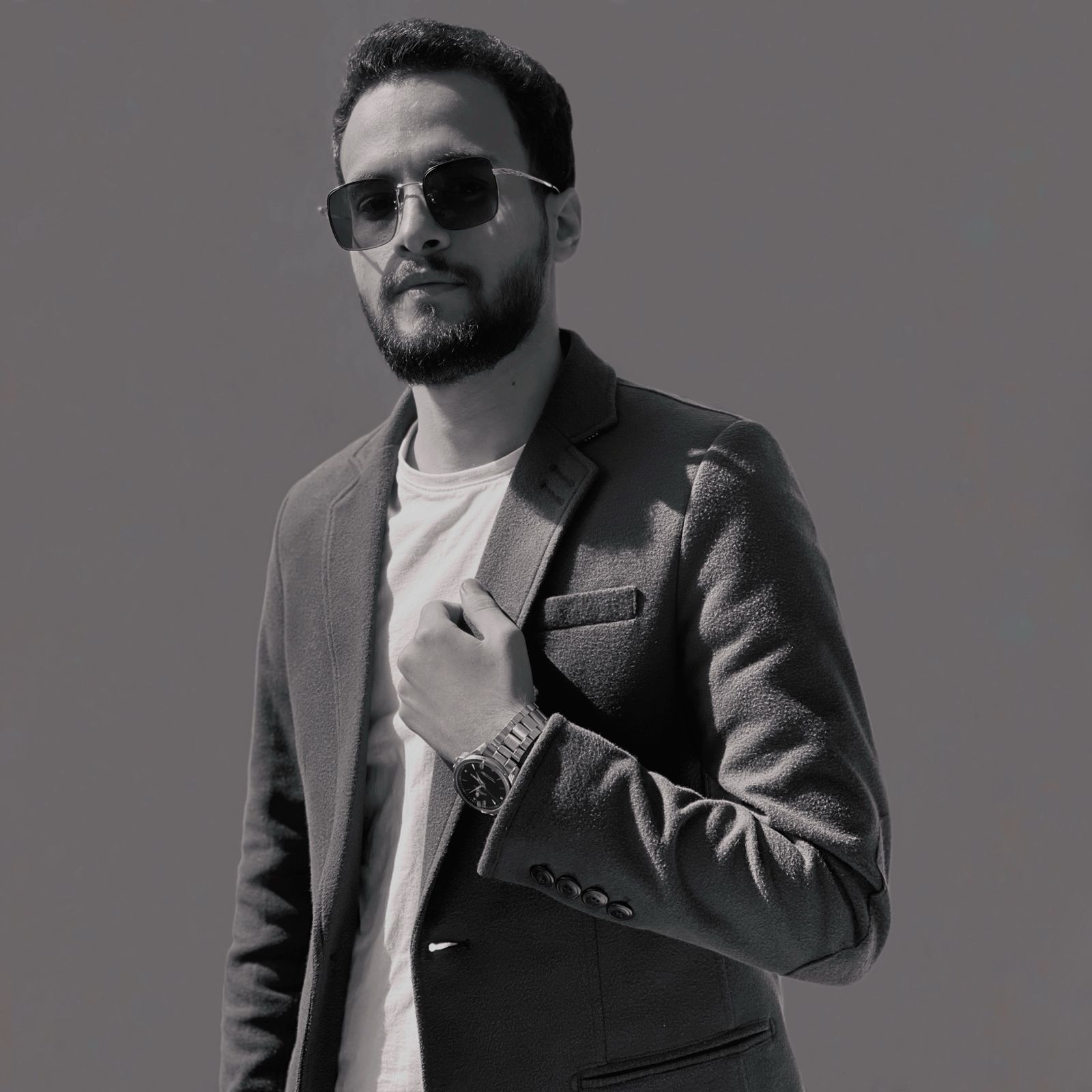
In the era of digital transformation in the life sciences, traditional researchers working solely in wet labs are no longer sufficient to tackle modern scientific challenges. Today, biotechnology is shifting towards a new model of scientists known as Hybrid Scientists — researchers capable of combining hands-on laboratory experiments (Wet Lab) with advanced computational analysis (Dry Lab / Computational Biology).
Abdulaziz Khaled Abdul Latif represents a clear example of this new generation of biotechnology scientists.
Abdulaziz, a Biotechnology student at Mansoura University, is deeply interested in Computational Drug Discovery. Through specialized training in Computer-Aided Drug Design (CADD), he successfully transformed theoretical knowledge into an advanced research project in Structural Bioinformatics and Protein Modeling.
His project focused on studying Thyroid Peroxidase, a key protein in thyroid physiology, playing a critical role in several autoimmune disorders related to the thyroid.
The project began with a comprehensive analysis of the protein’s genetic sequence, consisting of 933 amino acids, identifying the functional regions targeted in drug design:
- Mature Protein
- Extracellular Domain
These regions represent the most suitable targets for Structure-Based Drug Design and Molecular Docking studies.
Next, a 3D structural model was built using the AI-driven protein prediction system AlphaFold, revolutionizing protein structure prediction. To prepare the model for drug discovery studies, Protein Preparation was performed using Schrödinger, followed by energy optimization with Molecular Operating Environment (MOE) to achieve a stable and analyzable structure.
During Structure Validation, a significant technical challenge arose: multiple protein chains were merged into a single chain during preparation, causing the model to be rejected by some AI-based analysis platforms. Instead of rebuilding the model entirely, the issue was addressed analytically through:
- ERRAT report analysis
- Defining the amino acid range for each chain
- Redefining and separating chains using PyMOL
An energy minimization was then applied to weak regions only, improving the structural quality and raising the validation score to over 89%.
As a direct outcome of this advanced structural work, Abdulaziz gained privileged access to the AI-powered drug discovery platform PAULING.AI. Using advanced Deep Learning algorithms, the project accurately identified an Allosteric Site with 96% precision, opening the door to designing new drug molecules targeting this site instead of the traditional active site.
This strategy represents a modern approach in Allosteric Drug Design, offering benefits such as reduced side effects and more precise regulation of protein activity.
One key factor contributing to the project’s success was Abdulaziz’s hybrid scientific background. In addition to computational modeling expertise, he also possesses practical experience in molecular biology techniques, including:
- DNA extraction
- PCR amplification
- Molecular cloning
- Protein-related experimental workflows
This combination of Wet Lab Expertise and Computational Drug Design is now among the most sought-after skills in the biotechnology job market.
The future in this field relies increasingly on scientists capable of:
- Designing hypotheses using computational models
- Testing them experimentally in the lab
- Refining them through bioinformatics analysis
This is known as Hybrid Experimental-Computational Research.
Abdulaziz’s specialized training in CADD played a pivotal role in his scientific journey, providing advanced practical experience in:
- Structural Bioinformatics
- Molecular Docking
- Protein Modeling
- Drug Design Strategies
- AI-assisted drug discovery
This training enabled him to move from academic learning to executing a real research project in AI-assisted drug discovery.
As a result of his advanced research work, the project was accepted at the Academy of Scientific Research and Technology, Egypt, receiving research funding of 90,000 EGP — an achievement reflecting the scientific value of the project and the importance of practical training in drug discovery.
For Abdulaziz, this project marks the beginning of a long scientific journey in Computational Drug Discovery, focusing on developing new drug design strategies using AI and molecular modeling. It underscores that the future of biotechnology will increasingly rely on researchers capable of integrating experimental science with AI and computational analysis.
For full project details, visit the GitHub repository:
https://github.com/abdulaziz-khaled/Structure-Based-Protein-Design-and-Allosteric-Site-Identification-of-Thyroid-Peroxidase-TPO
Final Paragraph (Bioinformatics Gate Scholarship):
Abdulaziz Khaled Abdul Latif, a talented Biotechnology student from Mansoura University, has successfully leveraged our Bioinformatics Gate platform through a fully covered scholarship provided by our company. His dedication and achievements in Computational Drug Discovery are exemplary, and we wish him continued success in his future scientific endeavors.